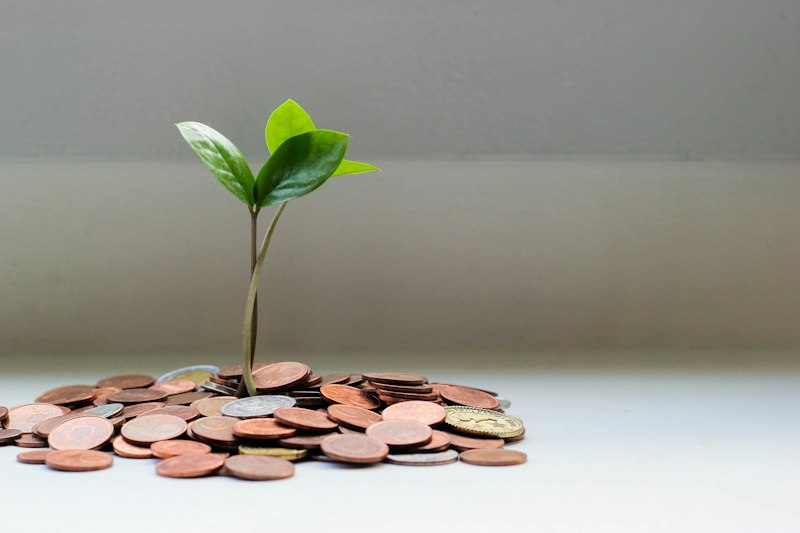

The $1,000 Emergency Fund: Why It's Your Most Important Financial Goal Right Now
If you asked most financial advisors what you should do first, they'd tell you to pay off high-interest debt, or max out your 401(k) match, or build a 3–6 month emergency fund.
They're not wrong about those things. But for most people, none of them matter until you've done one thing first: put $1,000 in savings and leave it there.
Why $1,000 Changes Everything
The problem with living without savings isn't just financial stress — it's the trap it creates.
Without savings, every emergency goes on a credit card. The credit card charges 20–29% interest. You make minimum payments and the balance barely moves. Then another emergency happens. The debt grows. The minimum payment grows. You have even less room each month.
This is the cycle. And $1,000 breaks it.
Not permanently — one emergency can wipe out $1,000 quickly. But it breaks the pattern of every unexpected expense going straight to debt. A car repair, a medical copay, a broken appliance — these are emergencies for most families because there's no cushion.
The Psychological Effect
There's a reason financial behaviorists emphasize this specific milestone: it changes how you feel about money.
Going from $0 in savings to $1,000 feels like crossing a threshold. It proves to yourself that you can save. It makes you feel less desperate, which reduces impulsive spending. It creates a foundation to build from.
The jump from $1,000 to $5,000 feels more achievable once you've already hit $1,000. The first milestone is the hardest one.
How to Get There in 30–60 Days
This is not a "cut your daily latte" advice column. Here's what actually moves the needle:
Sell things. Go through your house and sell everything you haven't used in a year. Electronics, clothes, furniture, sports equipment, games, tools. Facebook Marketplace, eBay, and Craigslist can turn clutter into $200–$500 quickly.
One month of extreme cuts. Cancel every subscription except the ones you use daily. Eat from what's in your pantry and freezer. No restaurants. No Amazon orders. This is temporary, not permanent.
One extra income push. Pick up a weekend of DoorDash, sell something on Etsy, tutor someone, do yard work — one temporary income source for 30 days.
Stop 401(k) contributions temporarily (but never below your employer match). Your 401(k) is important. But if you're in a financial crisis with no savings, $100/month going into retirement savings isn't helping you right now. Pause non-matched contributions temporarily, build the buffer, then resume.
Where to Keep It
In a high-yield savings account, separate from your checking account.
The separation is crucial — if it's in the same account you spend from, it will slowly get spent. A separate account, ideally at a different bank, creates just enough friction to leave it alone.
High-yield savings accounts currently pay 4–5% APY, versus 0.01% at most traditional banks. On $1,000, that's $40–$50 per year.
Never invest an emergency fund in the stock market. Stocks go down when emergencies happen most — you can't afford to have your safety net cut in half right when you need it.
What Counts as an Emergency
This is where people go wrong. An emergency fund is for:
- Car repairs needed to get to work
- Medical bills
- Essential appliance failure (refrigerator, heat/AC)
- Sudden job loss
It is NOT for:
- Sales that are ending
- Planned expenses you forgot to budget for
- Vacations
- Upgrading a phone that still works
The discipline of defining what counts protects the fund.
After $1,000
Once you have your starter fund, keep going. The full target is 3–6 months of essential expenses. At $3,000–$4,000 monthly expenses, that's $9,000–$24,000.
That sounds overwhelming. That's fine. You don't build it all at once. You build $1,000. Then $2,500. Then $5,000. One step at a time.
Use our Budget Tracker to track your progress. Watching the number grow is one of the few financial activities that's actually motivating.
Comments
Sign in to leave a comment.
Loading comments…